
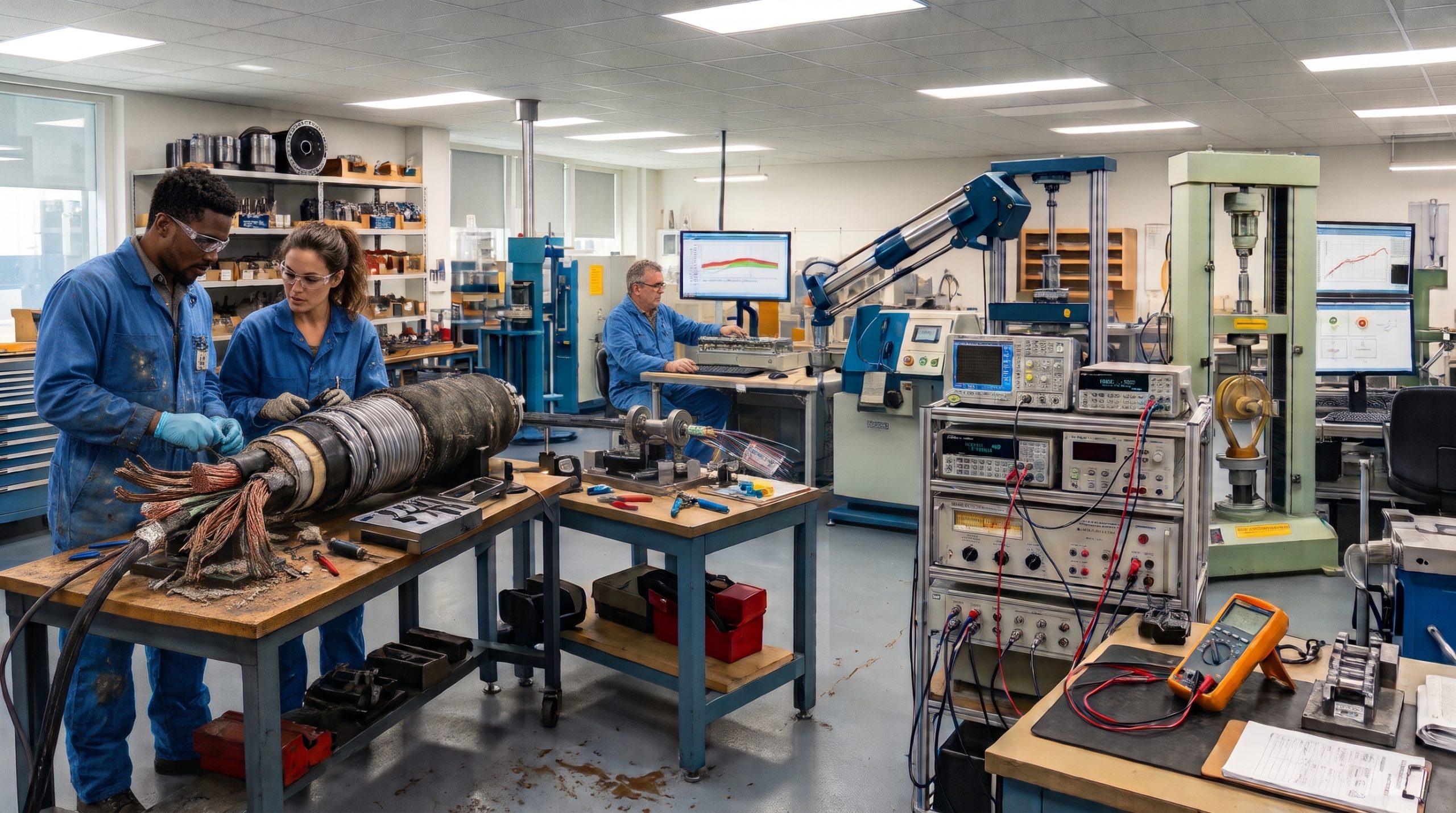
Laboratory and workshop services in Newcastle-upon-Tyne: book it by the day or request BPP to execute a full test programme.
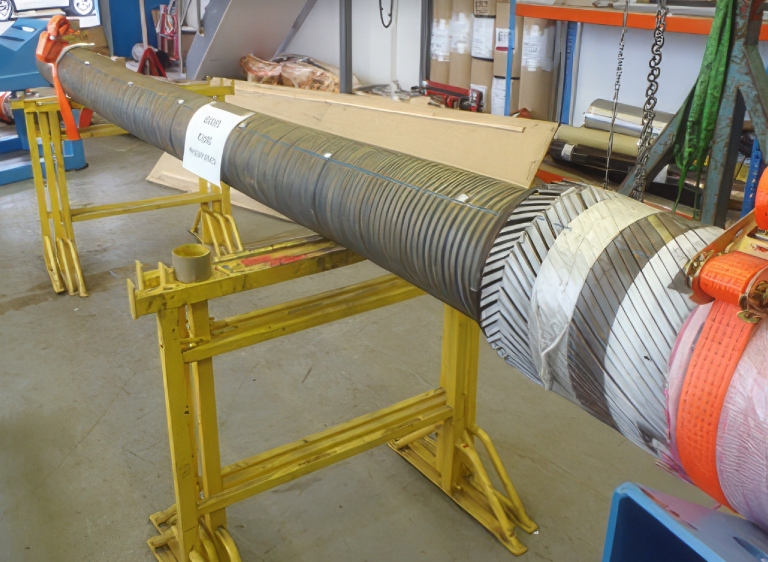
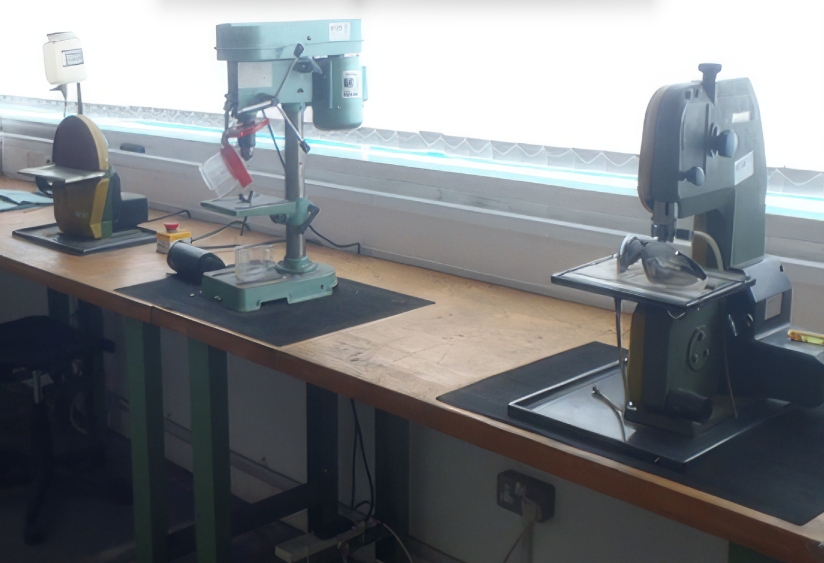
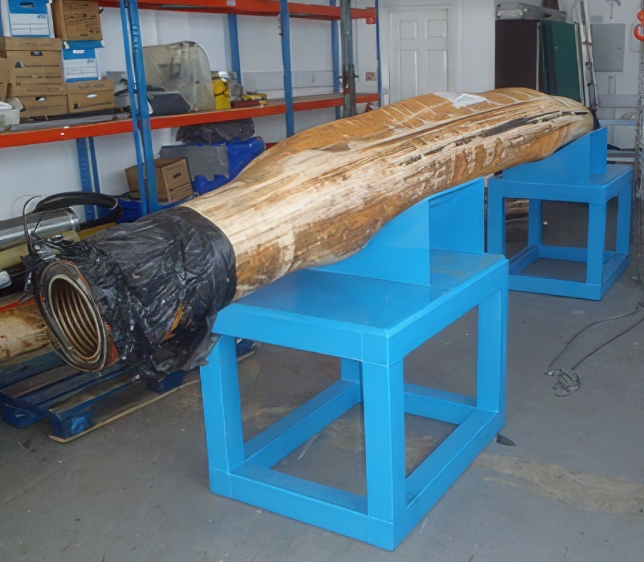
BPP has a laboratory and testing facility with nearly 100m² of usable workshop floor space, plus approximately 75m² of office space on a mezzanine, located close to Newcastle-upon-Tyne with excellent road, rail and air links. This has specialised laboratory floor space and test equipment to carry out a wide range of examinations, testing and forensic investigations of subsea power cables, SURF products, pipelines and other subsea components.
BPP’s professionally qualified engineers, backed by a network of specialist consultants, can plan, set up, execute and report on the testing that you require; offering a turn-key, low risk and low cost service. The Laboratory has a full time Safety Manager and Technician support when testing is in progress.
How you can work with us
Ad hoc. Need a test rig, a test or a day of lab time? Book the facility for a defined task. BPP can assist with the design and supply of test equipment together with engineer/technician support, calibrated instruments and a data record of results.
Project. Tell us what testing or investigation that you require. BPP will scope the test programme, agree the results required and/or the pass and fail criteria, carry out the testing and report against the standards you specify.
Turnkey. From test design through to sample handling, testing, analysis and a signed-off report, with one point of contact. BPP’s engineers also carry out independent design, analysis and root cause investigations.
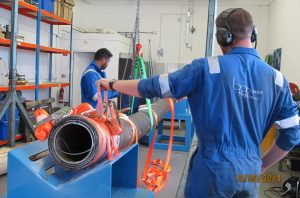
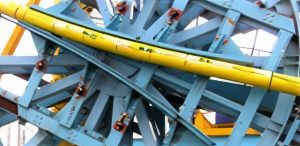
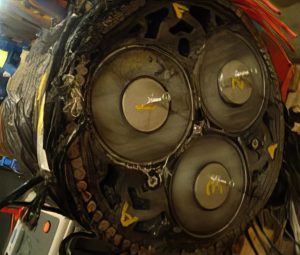
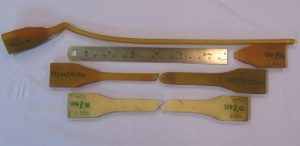

Forensic Examination and Dissection
BPP have undertaken numerous forensic dissections of failed or faulty SURF, subsea MV/HV power cables and telecommunication cables as well as associated equipment as part of a root cause analysis (RCA) investigation. Equipment is taken apart carefully component by component with measurements, photographs and observations taken throughout. This informs a final report in which the as-received condition of the equipment sample is assessed, and the likely failure or fault mechanisms are determined and backed up by research and analysis.
Repeat clients have included energy companies, lawyers, loss adjusters and insurance underwriters
Mechanical Testing
A wide range of testing is available to establish the mechanical properties of individual components or power cables and SURF equipment. Typical testing includes one or a combination of bending, tension and torsional testing. These tests can be used to also establish cable performance and behaviour under set conditions, such as during installation and operation.
Standards we work to include API Spec 17E / ISO 13628-5 (subsea umbilicals), ASTM E8 (tension testing of metallic materials) and ASTM D638 (tensile properties of plastics). A more detailed list is on the BPP Renewables Testing page.
Electrical Testing
Electrical testing of power cables can be a useful tool in determining the nature of or the root cause of a fault or failure. BPP can perform a variety of electrical tests compliant with IEC, IEEE, Cigre and ICEA standards to determine cable or component performance. These tests can then allow BPP to advise clients on possible failure modes and their possible origin in cable design and manufacture.
Tests include conductor resistance, insulation resistance, high-voltage AC and DC, partial discharge, loss angle (tan δ), capacitance and current rating, to standards such as IEC 60502, IEC 60840 and IEC 62067.
Material Chemical and Mechanical Evaluation
It is important to determine the composition of metallic components as well as their bulk mechanical properties in a forensic investigation or RCA. The chemical make-up of a material can reveal the cause of behaviours which can be substantiated by subsequent material testing. This is performed using various spectroscopy methods to determine elemental composition and laboratory mechanical tests including tensile, hardness and impact testing.
Mechanical methods follow standards such as ASTM E8 and ASTM E23.
Thermal Testing
A variety of thermal tests including Differential Scanning Calorimetry and Thermo-Gravimetric Analysis are used to evaluate the thermal properties of non-metallic components and their performance during operation. These tests can reveal vital information relating to predicted lifetimes, in addition to highlighting possible failure modes. Additionally, ageing tests can be performed to determine the functionality and predict performance of a component across the asset’s lifespan.
Methods follow standards such as IEC 1074 (melting and crystallisation by DSC) and IEC 60811.
Hydrogen Embrittlement Testing
Hydrogen embrittlement (HE), also known as hydrogen induced cracking (HIC) test, can be performed for the armour wires of cables, or SURF assets. Samples are tested under severe conditions, e.g. in simulated seawater containing chloride ions, at maximum negative cathodic potential, and under maximum stress level for a certain time period. After the test, the sample is examined for evidence of cracking, blistering, delamination and so on.
Stress Corrosion Cracking
Sulphide stress cracking (SSC) and stress corrosion cracking (SCC) is performed over the cables and umbilicals or their components such as armour wires. The sample is tested under tension at certain temperature and pressure and in simulated corrosive environments, e.g. containing hydrogen sulphide (H2S), chloride ion, and carbon dioxide (CO2).
Sulphide and stress corrosion cracking tests follow NACE TM0177.
Equipment
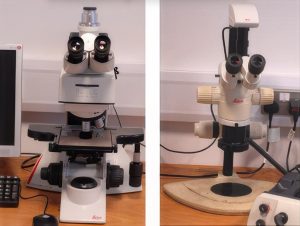
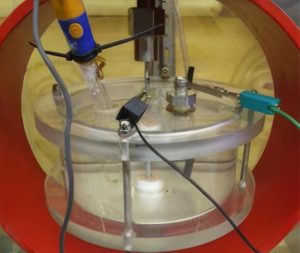
The above photographs show some of the test equipment housed in BPP’s laboratory. In addition to this, equipment from specialised independent test houses is also used for specific customised tests.
Who supports your test
Testing work is planned, executed and reported on by BPP’s full-time, professionally qualified engineers, whose specialisms include power cables, materials science, metallurgy, forensic investigation and quality auditing.
Project execution
- Enquiry: send us testing objectives together with details of your samples, applicable standards and desired time scale.
- BPP engineers will carry out a scoping exercise to agree the test programme and planned outcomes.
- This will be followed by an agreed quotation for the project and turnkey delivery.
- BPP engineers will set-up the test rigs with calibrated instrumentation and a test programme.
- Testing will be carried out and witnessed as agreed and with full photographic and video records.
- Report: results, analysis and conclusions provided in a formal report within an agreed timescale.
Email bpp@bpp-tech.com to discuss your requirements or Contact Us.
